

HSK 3.0: What You Need to Know About the New Chinese Language Course
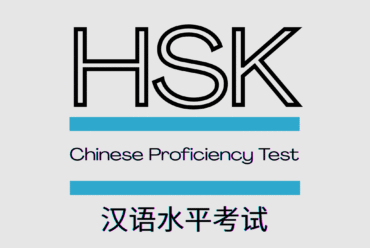
Chinese has long served as a bridge of mutual understanding and exchange of ideas between civilizations. Globally, the number of Chinese language learning centers and individuals eager to learn the language is growing significantly. Therefore, to improve the quality of Chinese language teaching in the international community, updating and refining HSK (Chinese Proficiency Test) textbooks is essential.
HSK 3.0 – What Changes Were Made in the New System
HSK 3.0 is an updated system for teaching the Chinese language, in which the Chinese language proficiency structure has changed significantly. Specifically, while the original system comprised a six-level examination system (六级考试体系), the new standard introduces a structure of “three stages and nine levels” (三等九级). More concretely, the new Chinese proficiency determination structure consists of beginner (初级), intermediate (中级), and advanced (高级) stages, encompassing a total of nine levels instead of six.
The new course consists of main textbooks and workbooks for all six levels. The main textbook focuses on teaching the core content of the study material, while the workbook is a continuation of the material given in the textbook and serves as an additional resource.
Notably, the new HSK textbooks maintain a student-centered approach based on modern language teaching methods and practices. This approach includes classroom instruction, independent study, and simplifying the learning process with the help of artificial intelligence.
AI Assistant – Your Guide in the Chinese Learning Process
An interesting innovation in the new HSK system is the use of artificial intelligence. Embedded within the course textbooks is the AI assistant “Xiao Yu” (小语), which combines the material directly provided in the textbooks with electronic resources. It acts as a kind of guide, helping students master linguistic points. Each textbook features an AI assistant section where various cultural and informational texts, as well as interactive exercises, can be found. This component makes the learning process much more diverse.
At this stage, only the first, second, and third-level textbooks of the HSK 3.0 course are available, encompassing a variety of learning components. Their content structure is presented below.
Level 1 Textbook of the New HSK 3.0 Course
- Scope: 15 lessons, requiring 30–36 academic hours.
- Vocabulary: 300 new words and 40 language components defined by the new curriculum.
- Structure: In addition to expanded vocabulary, each lesson consists of classroom assignments such as dialogues, pair and group exercises aimed at refining conversational Chinese, giving students the opportunity to put new material into practice.
- AI Component: At the end of each lesson, there is a bonus section by the AI assistant “Xiao Yu,” which includes cultural or informational updates related to the lesson’s content.
Level 2 Textbook of the New HSK 3.0 Course
- Scope: 15 lessons, requiring 30–45 academic hours.
- Vocabulary: 200 new words and 45 language components.
- Structure: Each lesson features expanded vocabulary, three dialogues, one narrative text, classroom assignments, and pair/group exercises. Additionally, group surveys are provided to help students apply already learned material in conversational tasks.
- AI Component: Includes the bonus section by the AI assistant “Xiao Yu,” featuring an in-depth analysis of important cultural aspects and additional informational articles.
Level 3 Textbook of the New HSK 3.0 Course
- Scope: 20 complex lessons, requiring 60–80 academic hours.
- Vocabulary: 988–1,000 new words and approximately 97 language components.
- Structure: Built on complex situational dialogues and narrative-style texts, with special attention devoted to communication skills through situational role-playing games, group discussions, and presentations.
- AI Component: The AI assistant “Xiao Yu” is an integral part of this textbook, offering students informational rubrics, in-depth cultural analysis, and interactive digital assignments.
Thus, the new HSK 3.0 course is not just a collection of textbooks. It is a completely new academic experience that takes Chinese language teaching practice and systems to a whole new level, offering international students a more in-depth and academically refined syllabus.